Inaugural post of this new collection. The idea is not original: I’m stealing from the best (and please don’t expect this sort of quality and consistency from me):
- kottke.org — Jason Kottke, the original link blog
- Register Spill — Joy & Curiosity — Thorsten Ball, ~10 links a week with a sentence or two of opinion
- Simon Willison’s Weblog — linkblog plus “weeknotes” posts
- ongoing — Long Links — Tim Bray’s occasional long lists of worthwhile reads
- Michael Tsai — Apple/dev link blog, quotes plus commentary
- Daring Fireball — Linked List — John Gruber, the original link-plus-two-cents format
- Waxy.org — Andy Baio’s links
It’s a (probably) futile attempt to revive a moribund blog. I noticed my posting frequency declining to zero, but despite this evidence and in a surge of misplaced blogging optimism I even gave this new collection a Hugo index page and a place on the blog menu bar.
Anyways, let’s get started.
The End of Reading Is Here Society is undergoing a civilization-scale shift toward a postliterate era. What happens to a society when people stop reading? www.theatlantic.com
Everybody has seen this essay by now. Some of the stuff I found hard to believe:
Ong cited case studies by the neuropsychologist Alexander Luria, who traveled to remote villages in Uzbekistan and Kirghizia in the 1930s, when peasants were starting to receive rudimentary reading and writing instruction. Luria met his subjects at teahouses, in field camps, and around evening fires. There, he posed a number of questions designed to elucidate differences in how illiterate and literate peasants thought. Luria told the peasants: “In the Far North, all bears are white. Novaya Zemlya is in the Far North.” He then asked them the color of bears in Novaya Zemlya. The literate peasants were able to complete the syllogism. But the illiterate ones refused to try, explaining that they had never been to the north and thus couldn’t answer. Achieving literacy seemed to have conveyed an ability to think logically and abstractly, not simply to read words.
The author concludes the essay with this warning:
But the threat of apathy remains. What we’re losing is the ability and inclination to read those texts. An astonishing wealth of information and wisdom has been bequeathed to us. What we’ll do with this inheritance is up to us.
Apathy leads to the bigger threat that already happened in the US and is quickly spreading globally: incompetence hijacking the political sphere, demagogues promising simple “solutions” to a postliterate audience.
In 1982, Walter J. Ong observed that modern civilization was entering a phase of “secondary orality,” in which a once-literate society reverts back to some of the conventions of preliterate cultures. Because spoken words disappear as soon as they’re uttered, oral cultures value repetition to aid memory. Bards in oral societies make use of stock phrases and mnemonics to keep track of their train of thought. They traffic in epithets and “enthusiastic description of physical violence,” in Ong’s words, because conflict is more memorable than dispassionate discussion. Speakers can’t edit their words the way writers can, so they press on without admitting their mistakes. If they later contradict themselves, they don’t expect the audience to recall their earlier statements. Meaning depends on the identity of the speaker, not on any concept of objective truth.
But then again, was it ever different? Humanity has always had the problem of hucksters rising to power by selling bullshit to a willing electorate, regardless of the literacy levels of said electorate.
Selected as One of The New York Times’s 100 Notable Books of the Year A Barack Obama Summer Read Bram Stoker Award Winner for Superior Achievement in a Novel Nebula Award Winner for Best Novel Locus Award Winner for Horror Libby Award Winner for Best Horror Kirkus Reviews Best Historical Fiction Los ...
Speaking of reading, I finished The Buffalo Hunter Hunter a while ago and I’m still thinking about it. It stayed with me, Weasel Plume stayed with me. The cruelty we humans inflict on each other and on animals is hard to face.
This book challenges us to face it using the Marias Massacre and the nearly complete and deliberate annihilation of the American bison to cause famine for Native American tribes.
The novel comes in the guise of a vampire horror story but is really a history lesson and a touching description of what was lost when European settlers bulldozed their way across the American continent.
There is something wishfully satisfying in Quentin Tarantino movies where there is an alternate ending to historical events (Inglourious Basterds, Once Upon a Time in Hollywood). Stephen Graham Jones doesn’t go there. Weasel Plume doesn’t get a Happy Ending. Instead he gets some bitter revenge that he didn’t even want and that comes with the high price of losing his identity and his tribe.
“….but if I’d known what was going to happen, I would have at least looked behind me to see camp one last time. The way the smoke curled up into the grey sky from each lodge. The dogs fighting over scraps, but their tails wagging while they fought. The two girls and one boy trying to throw an arrow through a hoop they were rolling across the crusted snow. The iron kettles hanging over fires, real-meat and turnips boiling in them. The woman whose name I can’t remember coming up from the creek with a skin of water, her eyes set, lips shut, but she was humming too. I think she was humming, but I don’t know what. The day rider who might even have been White Teeth plodding in on his pony for a bowl of something warm. And the girl whose arrow finally went through that hoop, and how she fell to her knees and held her hands above her head and yipped and whooped until the other boy and girl tackled her into the snow, their tails wagging just like the dogs’.”
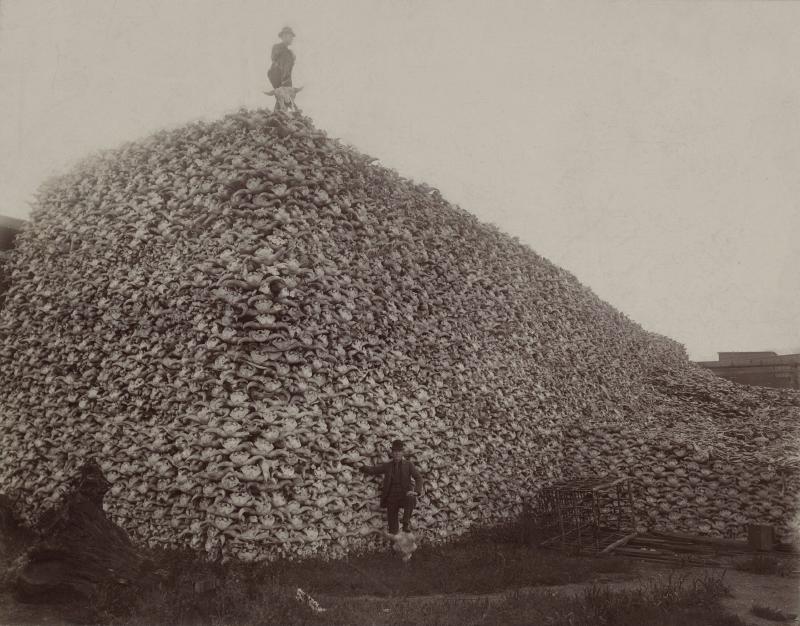
While reading the book, I found this Reader’s Guide very helpful.
Beside the Syrian Sea by James Wolff
PW STARRED REVIEW: “Brilliant sequel to 2018’s Beside the Syrian Sea. James Wolff skillfully portrays an espionage agent on the verge of losing himself to his demons. This is spy fiction like no other.” Publishers Weekly ------ April Thriller of the Month: "Wolff’s examination of the crises of ...
“A wonderful, artful, absorbing espionage novel.” Adam Brookes, author of Night Heron The story of an internal investigation into the past of a British spy suspected of having been turned by Russian agents. British intelligence is in a state of panic. Cracks are appearing, or so a run of ...
I always was and still am completely into spy novels of a certain quality. This sounds snobbish but it has to be John le Carré-level writing. James Wolff gets there and I devoured the first two books and will continue with the third one soon. They do require a certain suspension of disbelief, but which spy novel doesn’t? And sometimes real life is weirder than the novels, see:
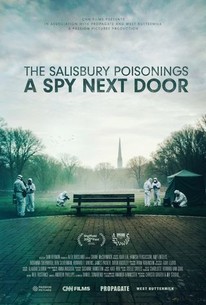 The Salisbury Poisonings: A Spy Next Door (2026)
Lindsey Graham knew better. We all knew better. And here we are.
I’ll leave you with my most popular Mastodon post ever 🙂:
 uwe (@uwedeportivo@vivaldi.net)
Attached: 1 image
portrait of a lady
#DogsOfMastodon
social.vivaldi.net
uwe (@uwedeportivo@vivaldi.net)
Attached: 1 image
portrait of a lady
#DogsOfMastodon
social.vivaldi.net